When Do You Need to Have a Diagnostic vs Therapeutic Endoscopy?
In this article:
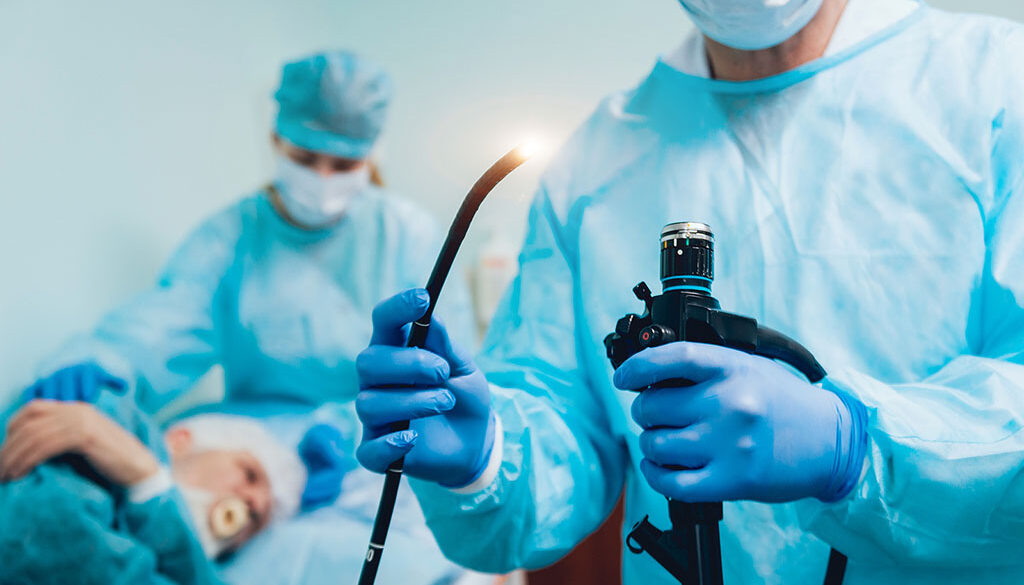
If you’ve been told you need an endoscopy, you may be wondering what the difference is between a diagnostic vs therapeutic endoscopy, and how your doctor decides which is appropriate. This minimally invasive procedure involves using a thin, flexible tube with a camera to look inside your body. Endoscopy can both identify problems and treat them – sometimes during the same procedure.
In this article, we’ll clarify the difference between diagnostic and therapeutic endoscopy, when each is used, and the overlap between the two so you have a better understanding of what to expect.
From our board-certified gastroenterologists to our specialized endoscopy centers, RMG Gastroenterology provides comprehensive care for digestive conditions. We make it simple to access expert screenings and procedures at several convenient locations. If you’re seeking support for ongoing digestive issues, we invite you to contact us to request an appointment.
What’s the Difference Between Diagnostic and Therapeutic Endoscopy?
A diagnostic endoscopy is a minimally invasive procedure that uses a thin, flexible tube and a tiny camera to find and identify health issues causing symptoms or to screen for diseases.
The endoscope visually examines areas like the esophagus, stomach or colon. The procedure detects problems such as inflammation, ulcers, tumors or the sources of bleeding, then transmits real-time images to a monitor.
Therapeutic endoscopy involves actively treating the issues found, including removing polyps, stopping bleeding, opening strictures (abnormal narrowing of the intestines) and treating other conditions.
Modern endoscopy combines both so that therapeutic treatments can often take place during a diagnostic endoscopy if problems are detected. This is done using specialized tools passed through the endoscope that allow us to perform treatment right away.
When is a Diagnostic Endoscopy Ordered?
A diagnostic endoscopy may be ordered when you have persistent, unexplained or potentially serious symptoms such as:
- Ongoing abdominal pain
- Difficulty swallowing
- Chronic heartburn or reflux
- Bleeding in vomit or stool
A diagnostic endoscopy is also used for screening and prevention, such as in the case of a colonoscopy. A colonoscopy detects early signs of colon cancer, such as precancerous polyps, before symptoms appear.
Diagnostic endoscopy offers the advantage of enhanced accuracy. Unlike imaging tests such as X-rays or CT scans, it provides direct visualization into your body in real time and allows us to take biopsies for lab testing during the same procedure.
For this reason, endoscopy may be recommended when non-invasive tests like bloodwork and imaging aren’t enough, allowing us to provide faster, more precise diagnoses and guide better treatment decisions.
What Treatments Can Be Done Through a Therapeutic Endoscopy?
Therapeutic endoscopy often allows us to treat health issues immediately without the need for major surgery. And because the procedure is minimally invasive, patients typically experience faster recovery with less pain.
Therapeutic endoscopy can be used to:
- Treat gastrointestinal bleeding using heat, injection therapy or mechanical clips and sealing methods
- Remove abnormal growths such as polyps during colonoscopy, which reduces the risk of developing colon cancer
- Relieve blockages using stents (small, expandable tubes) to open narrowed areas or remove obstructions like gallstones directly
- Treat bile duct and pancreatic conditions to help reduce pain, prevent infection and restore normal function
- Manage inflammatory bowel disease (IBD) complications like strictures, fistulas (abnormal connections between internal organs) and bleeding
- Relieve pressure and symptoms caused by tumors
Can Therapeutic Treatments Occur During a Diagnostic Endoscopy?
Yes, modern endoscopy makes it possible for therapeutic treatments to be delivered during a diagnostic endoscopy if a problem is found; this is very common.
Often, an endoscopic procedure will begin as diagnostic for the purpose of identifying the cause of symptoms. If an issue is discovered during the exam, we can often treat it right away using the same instrument.
For example, we may:
- Remove a polyp during a routine screening colonoscopy
- Identify a bleeding issue and correct it during the same procedure
We’ll typically prepare for both diagnostic and therapeutic possibilities before your visit. In this case, you’ll be informed beforehand and asked to give your consent for potential treatments we deem necessary during the procedure.
RMG Gastroenterology: Comprehensive Diagnosis and Treatment of Digestive Conditions from Our Board-Certified Gastroenterologists
Endoscopy is a powerful tool for early detection and effective treatment of digestive issues. While diagnostic endoscopy discovers health issues and therapeutic endoscopy treats them, it is often a combined procedure. The benefit is faster diagnosis, immediate treatment and fewer invasive surgeries.
At RMG Gastroenterology, our board-certified gastroenterologists are skilled at performing routine and as well as high risk therapeutic endoscopy. These procedures are regularly performed at our four specialized endoscopy centers: Wake Endoscopy Center, Clayton Endoscopy Center, Wilson Digestive Diseases Center and Wake Forest Endoscopy Center.
If you’re seeking support for ongoing digestive issues, we invite you to contact us for an appointment.
Key Takeaways
- Diagnostic endoscopy uses a flexible camera-equipped tube to visually examine the digestive tract and identify causes of symptoms or screen for disease.
- Therapeutic endoscopy goes beyond diagnosis by treating issues such as bleeding, polyps, strictures, and blockages during the procedure.
- Modern endoscopy often combines both approaches, allowing doctors to diagnose and treat problems in a single session.
- Diagnostic endoscopy is typically ordered for persistent or serious symptoms like abdominal pain, difficulty swallowing, chronic reflux, or gastrointestinal bleeding.
- It is also used for preventive screening, such as detecting precancerous polyps during colonoscopy before symptoms develop.
- Compared to imaging tests, diagnostic endoscopy provides real-time visualization and enables tissue biopsies for more accurate diagnoses.
- Therapeutic endoscopy can treat conditions like gastrointestinal bleeding, remove abnormal growths, relieve obstructions, and manage complications of diseases like IBD.
- Because it is minimally invasive, therapeutic endoscopy usually results in less pain and faster recovery than traditional surgery.
- Many procedures begin as diagnostic but shift to therapeutic if an issue is found and can be treated immediately.
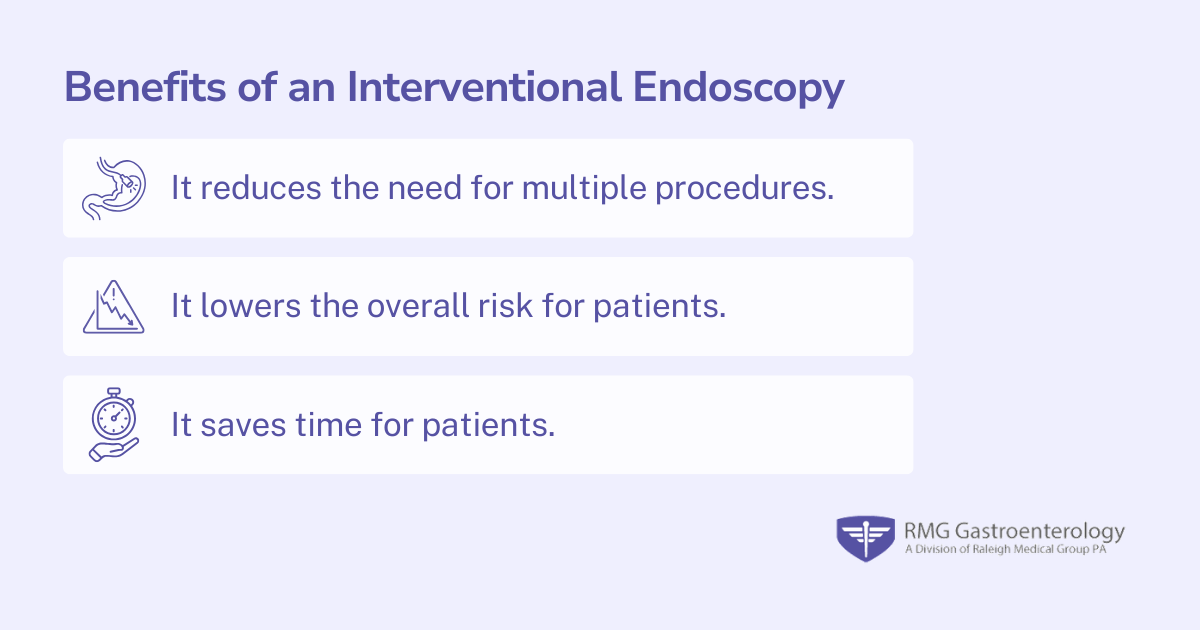
- Combining diagnosis and treatment reduces the need for multiple procedures, lowers risk, and saves time for patients.
The content within this article and others on this website is only for educational purposes and should not be considered as medical advice. For any questions or concerns, please consult with your healthcare provider.
=====
Sources:
Cleveland Clinic, “Endoscopy,”
https://my.clevelandclinic.org/health/diagnostics/25126-endoscopy
NIH, National Library of Medicine, National Center for Biotechnology Information, “Therapeutic endoscopy in gastroenterology,”